

Yoga for Headaches and Migraines: Simple Solutions You Can Do at Home.

When the head speaks, the body listens.
A headache is not just pain.
It is pressure, imbalance, and often suppressed tension.
In yogic understanding, headaches are linked to excess mental activity and blocked energy flow, while modern science points to the following:
- Muscle tension
- Poor posture
- Stress and nervous system overload
And this is where yoga becomes powerful, because it addresses both body and mind together.
Headaches affect millions globally and are among the most common neurological conditions.
According to the World Health Organization:
Nearly half of adults worldwide experience headaches annually
Research from the National Center for Complementary and Integrative Health suggests yoga may help reduce the following:
- Frequency of headaches
- Pain intensity
- Stress-related triggers
Why You’re Getting Headaches (Root Causes)
1. Stress & Overthinking
When your mind is constantly active, thinking, worrying, and planning, your body doesn’t stay relaxed.
Instead, it enters a low-level stress state.
What happens in your body:
- Muscles in your neck, shoulders, and scalp tighten
- Blood flow becomes restricted
- The nervous system stays in “alert mode.”
Over time, this creates a tight band-like pressure around your head, commonly known as a tension headache.
This is why your headache often appears:
- After a long day
- During emotional stress
- When you’ve been overthinking.
Your mind creates tension → your body holds it → your head feels it.
2. Poor Posture (Forward Head Position)
Modern lifestyle =
📱 Phone
💻 Laptop
🪑 Sitting for hours
This leads to forward head posture, where your head moves slightly ahead of your spine.
What happens in your body:
- Neck muscles become overworked and tight
- The upper back becomes weak
- Pressure builds at the base of your skull
This tension travels upward → causing headaches.
Even a small forward shift of your head can:
- Increase strain on neck muscles
- Compress nerves
- Trigger pain signals to the brain
Your posture doesn’t just affect your back; it directly affects your head.
3. Screen Time (Digital Strain)
Spending hours on screens affects your body more than you realize.
What happens:
- You blink less → eyes become dry and strained
- Eye muscles stay focused for too long
- Blue light exposure affects brain fatigue
This creates eye strain and headaches, often felt
- Behind the eyes
- Around the forehead
Additional impact:
- You unconsciously tighten your face and jaw
- Neck leans forward (link to posture issue)
Result: A combination headache (eye strain + tension)
Your eyes are working constantly but never relaxing.
4. Shallow Breathing (Hidden Cause Most People Ignore)
Most people don’t breathe fully.
Instead, they take short, shallow breaths from the chest.
What happens in your body:
- Less oxygen reaches the brain and muscles
- The body stays in a mild stress state
- Muscles don’t fully relax
This leads to:
- Increased tension
- Reduced circulation
- Higher sensitivity to pain
Over time:
Your body becomes tight + under-oxygenated → perfect condition for headaches.
Your breath controls your nervous system, and your nervous system controls your pain.
Your headache is rarely just about your head.
It is a combination of:
- Mental stress
- Physical tension
- Lifestyle habits
- Poor breathing patterns
Most people try to fix headaches with medication… But never address these root causes.
This is where yoga becomes powerful.
How Yoga Helps Headaches (Science + Wisdom)
1. Breath Regulation (Pranayama)

The bridge between mind and body
In yoga, breath is not just air; it is prana (life force).
When your breath is disturbed, your mind becomes restless. When your breath is calm, your body follows.
What happens in your body:
When you practice slow, controlled breathing:
- Your parasympathetic nervous system (rest mode) activates
- Stress hormones like cortisol begin to decrease
- Heart rate slows down
- Muscles start to release tension
Why does this help with headaches?
Most headaches are linked to stress and tension.
Shallow, fast breathing keeps your body in a constant alert state, which:
- Tightens muscles (neck, scalp, shoulders)
- Reduces oxygen flow
- Increases pain sensitivity
What pranayama does:
- Restores oxygen balance
- Signals the brain to relax
- Reduces internal pressure and tension
Your breath tells your brain whether to stay stressed or to relax.
This is why even 2–3 minutes of deep breathing can reduce headache intensity.
2. Gentle Movement (Yoga Asanas)
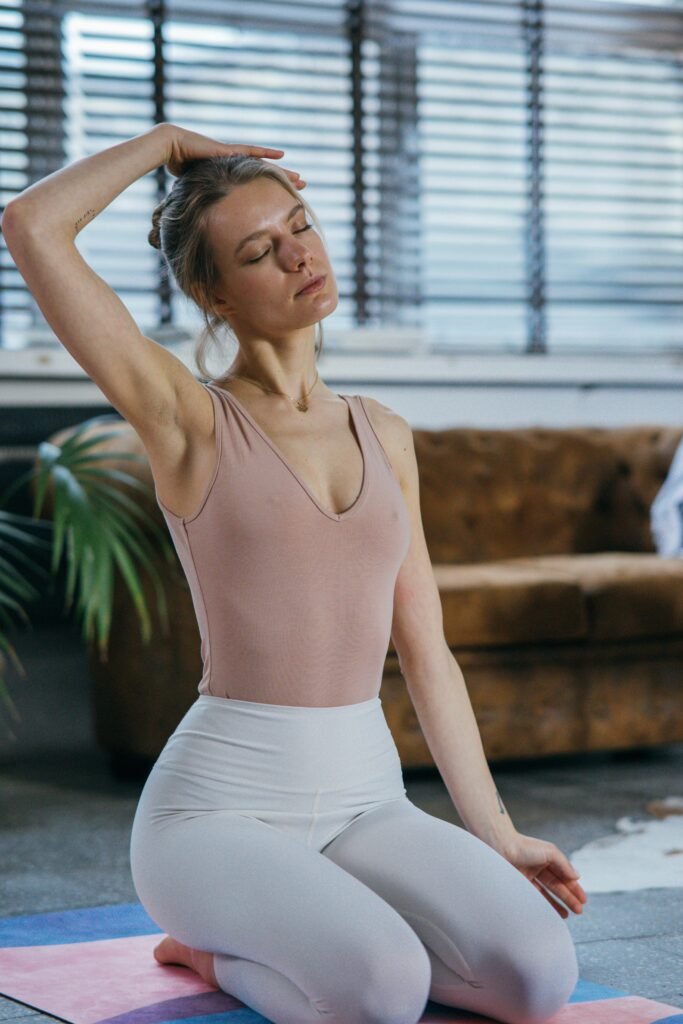
Releasing what the body has been holding
Headaches are often not created in the head; they are stored in the neck, shoulders, and upper back.
What happens in your body:
When you move gently through yoga poses:
- Tight muscles begin to lengthen and release
- Blood circulation improves
- Oxygen and nutrients reach affected areas
- Pressure on nerves decreases
Key problem areas:
- Neck stiffness
- Shoulder tightness
- Upper spine immobility
These areas directly contribute to headache formation.
How yoga helps:
- Loosens the muscles pulling on your skull
- Improves alignment (reduces strain)
- Restores natural movement
For example:
- Forward folds increase blood flow to the head
- Gentle stretches release trapped tension
Your body holds stress physically; movement is how you release it.
3. Mindfulness (Awareness + Stillness)

The root-level solution most people ignore
Even if your body is relaxed, a constantly active mind can still create headaches.
What happens in your brain:
- Overthinking keeps the brain in high-activity mode
- This increases mental fatigue
- Triggers tension pathways
What mindfulness does:
Through stillness and awareness:
- Brain activity slows down
- Thought patterns become calmer
- Emotional stress reduces
In yoga practice:
Mindfulness is present when you:
- Focus on your breath
- Stay aware of your body
- Move without distraction
Why does this reduce headaches?
- Breaks the cycle of overthinking
- Reduces stress triggers
- Prevents tension from building up again
You don’t just need to relax your body; you need to quiet your mind.
Yoga helps headaches because it works on three levels at once:
- Breathing → Calms your nervous system
- Body → Releases physical tension
- Mind → Reduces mental overload
Most solutions only target one of these.
Yoga integrates all three.
Now that you understand how yoga works…
Let’s look at simple practices you can start today.
Yoga Sequence for Headache Relief
- Deep Breathing (Pranayama)
- Child’s Pose (Balasana)
- Cat-Cow (Marjaryasana–Bitilasana)
- Seated Forward Fold (Paschimottanasana)
- Downward Dog (Adho Mukha Svanasana)
- Legs Up the Wall (Viparita Karani)
- Supine Twist (Supta Matsyendrasana)
- Final Relaxation (Savasana)
Watch the full guided routine on my page.
When Yoga Helps vs When to See a Doctor!!!
✅ Yoga Helps:
- Tension headaches
- Stress-related headaches
- Mild migraines
❌ Seek Medical Help If:
- Severe or sudden headaches
- Vision problems
- Nausea or neurological symptoms