

A teaching from the old path, for the modern yogi. In today’s world of yoga on social media, flexibility is celebrated. Deep backbends. Perfect splits. Extreme poses.
But let me whisper something ancient to you:
Yoga was never about how far you can bend.
It is about how deeply you can align.
For ANAYA – Self Serenity, this is not just philosophy.
It is the foundation of a safe, mindful, and sustainable yoga practice.
The Ancient Truth: Yoga Is Stability First.
In the sacred text, the Yoga Sutras of Patanjali, there is a simple but powerful line:
It means:
A posture should be steady and comfortable.
Not extreme.
Not impressive.
Not painful.
Steady. Stable. Easeful.
Alignment creates steadiness.
Flexibility without alignment creates instability. And instability invites injury, not enlightenment.
Flexibility Is Natural. Alignment Is Wisdom.
A child is flexible.
A gymnast is flexible.
But yoga is not gymnastics.
In the Hatha Yoga Pradipika, the emphasis is on control of energy (prana), not performance of shape.
When you focus only on flexibility:
- You overstretch joints
- You collapse into ligaments
- You chase deeper shapes
- You disconnect from breath
When you focus on proper yoga alignment:
- You protect your spine
- You activate the right muscles
- You build strength with awareness
- You practice safe yoga
Alignment builds longevity in your yoga journey.
Flexibility without structure is like a house without a foundation.
Why Alignment Matters More Than Flexibility (Especially for Beginners)
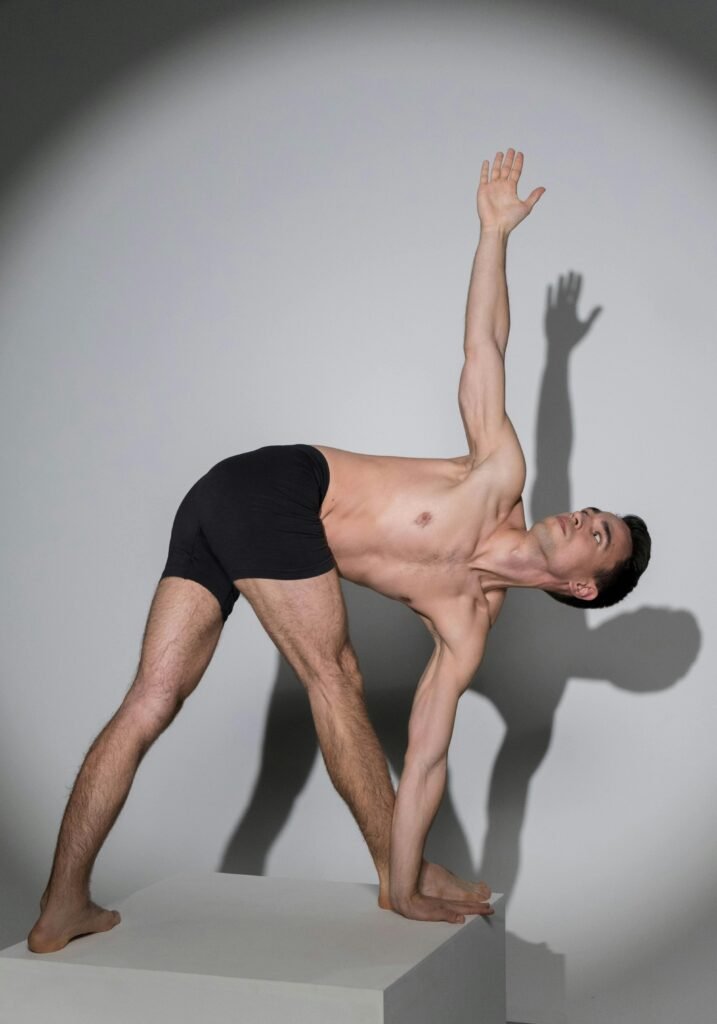
If you are new to yoga or returning after a break, this matters deeply.
Many people search:
“Do I need to be flexible to start yoga?”
“Is yoga safe for stiff people?”
The answer is simple:
You do not need flexibility.
You need awareness.
Alignment teaches:
- Where your weight should be distributed
- How to protect your knees in lunges
- How to stack shoulders over wrists
- How to lengthen before you deepen
This is the foundation of a beginner yoga practice.
Flexibility will come.
But it must come safely.
Alignment Protects the Energy Body
Ancient yogis did not speak of “injury prevention” the way modern anatomy does.
They spoke of prana, the life-force energy.
When the body is aligned:
- Energy flows freely
- Breath deepens naturally
- The nervous system softens
When we collapse into poses:
- Breath becomes shallow
- Tension accumulates
- The mind becomes restless
Alignment is not rigid.
It is the intelligent placement of bones and breath.
Social Media Yoga vs. Traditional Yoga
Today, yoga is often measured by:
- How high can your leg lifts go?
- How deep your backbend curves
- How aesthetic your pose looks
But real yoga asks:
Can you stay present?
Can you stay steady?
Can you stay kind to your body?
For ANAYA, we teach sustainable wellness yoga, not performance yoga.
Alignment is not about perfection.
It is about a relationship.
Alignment creates strength; flexibility follows.
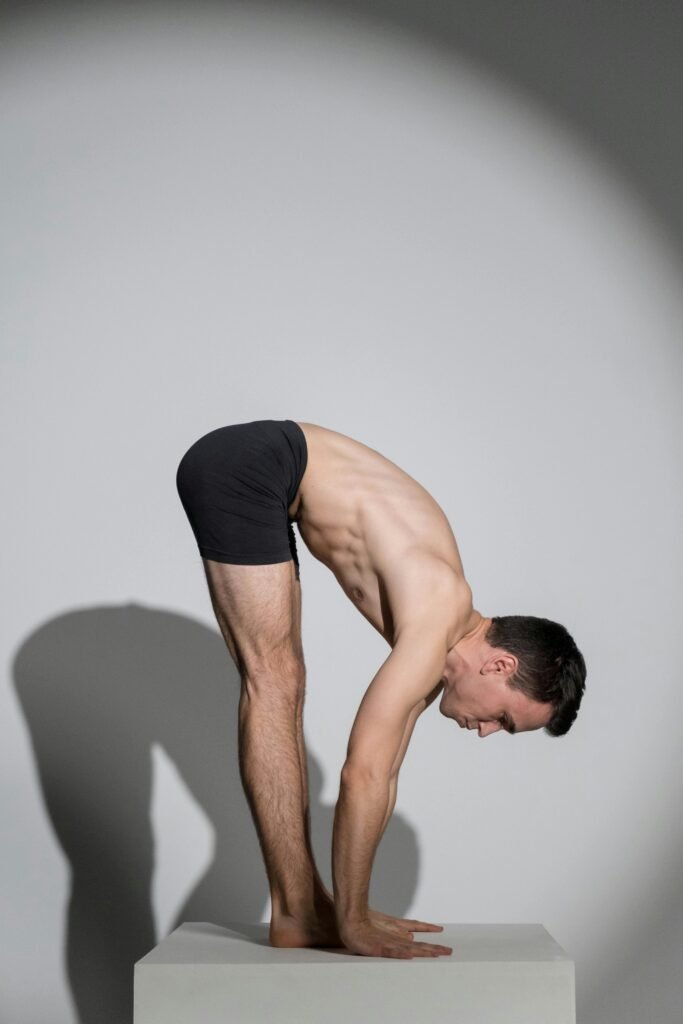
Here is a secret:
When you align correctly, flexibility naturally increases.
Because:
- Muscles engage safely
- Joints stabilize
- The body feels safe enough to open
Safety invites expansion.
Force creates resistance.
This is why in mindful yoga practice, teachers cue:
“Root down before you rise.”
“Lengthen before you fold.”
“Engage before you extend.”
A Message for the Modern Yogi
If you have ever felt:
“I am not flexible enough for yoga.”
Release that belief.
The goal is not flexibility.
The goal is integration.
Alignment brings:
- Stability
- Strength
- Injury prevention
- Nervous system regulation
- Long-term growth
Flexibility is only one small side effect.
The ANAYA Philosophy
At ANAYA – Self Serenity, we believe:
Your mat does not ask for performance.
It asks for presence.
Alignment is the presence in physical form.
When you align your body,
You begin to align your breath.
When you align your breath,
You begin to align your mind.
And that… is yoga.
References & Classical Foundations
The philosophical framework of this article draws upon primary classical yoga texts that have shaped traditional yoga practice for centuries.
Yoga Sutras of Patanjali
Particularly referenced is Sutra 2.46: “Sthira Sukham Asanam.”
This foundational aphorism, traditionally translated as “Posture should be steady and comfortable,” establishes stability and ease, not extremity, as the defining qualities of asana. Classical commentators interpret this sutra as emphasizing structural integrity and balanced effort within posture, rather than external flexibility or aesthetic depth.
Hatha Yoga Pradipika
This 15th-century Hatha Yoga manual outlines the preparatory role of asana in cultivating steadiness of body and regulation of prana (vital energy). The text prioritizes stability, energetic balance, and discipline over a performative range of motion, reinforcing the traditional view that posture serves meditative and energetic purposes rather than acrobatic achievement.
Interpretative Note
The interpretations presented in this article are informed by widely recognized English translations and traditional commentarial traditions. Emphasis has been placed on contextual understanding of classical Sanskrit terminology to maintain conceptual accuracy while making the teachings accessible to a contemporary readership.